Cold Start Guide: 2026 Harley-Davidson Ultra Limited FLHTK
Cold Start Guide: 2026 Harley-Davidson Ultra Limited FLHTK
Quick Reference Table
| Spec | Value | Source |
|---|---|---|
| Engine | Milwaukee-Eight 117 (1,923cc) V-twin, OHV 4-valve | Harley-Davidson |
| Fuel System | Electronic Sequential Port Fuel Injection (ESPFI) | H-D Service Manual |
| Battery Type | AGM (Absorbed Glass Mat), 12V | H-D Owner Manual |
| Recommended CCA | Minimum 300 CCA at 0° F | H-D Parts Catalog |
| Idle RPM (Cold) | 1,100-1,200 RPM | H-D Service Manual |
| Idle RPM (Warm) | 1,000-1,050 RPM | H-D Service Manual |
| Choke/Enrichment | None — Auto-enrichment via ECM | H-D Service Manual |
| Fuel Octane | 91 RON (87 AKI) minimum, 93 RON recommended | H-D Owner Manual |
| Cold Start Temp Range | 0° F to 100° F (-18° C to 38° C) | H-D Engineering Specs |
Difficulty & Time Estimate
- Difficulty Level: Beginner (1 out of 5) — fully automatic cold-start procedure
- Estimated Time: 5-7 minutes from key-on to rolling idle (cold engine)
- Seasonal Note: Below 40° F, allow additional 3-5 minutes of warm-up before riding
- The Ultra Limited is the most electrically complex Harley-Davidson Touring model — Reflex Linked Brakes with ABS, full Tour-Pak, heated grips/seats, and the large Boom! Box GTS screen all draw power. Battery health is especially critical on this model
Pre-Start Checklist
| Checkpoint | Status | Notes |
|---|---|---|
| Battery Voltage | ≥ 12.6V | Use multimeter on battery terminals; below 12.4V may struggle in cold |
| Fuel Level | Adequate | ESPFI requires minimum fuel pressure; very low tank may cause hesitation |
| Oil Level | Between marks | Check dipstick on level ground; engine seated but NOT running |
| Tire Pressure | Per owner's manual / tire placard | Ultra Limited is heavy — correct tire pressure essential, especially when cold |
| Kill Switch | RUN position | Right handlebar controls — easy to accidentally leave in OFF |
| Transmission | Neutral | Green neutral light must be illuminated |
| Kickstand | Up | Safety interlock prevents start in gear with stand down |
| Key/Fob | Present | Security system (H-D Smart Security) requires fob proximity |
Step-by-Step Cold Start Instructions
Step 1: Pre-Ride Visual Walkaround
Walk around the Ultra Limited before starting. This is the largest and most heavily equipped Harley-Davidson Touring model. Check for ice accumulation on the King Tour-Pak lid hinges in freezing weather. Inspect the lower fairing legs for ice or debris. Verify no snow or ice blocking the air intakes.
Step 2: Verify Kill Switch Position
Check the kill switch on the right handlebar switch housing. With so many controls on the switch housings (audio, cruise control, intercom), it is easy to accidentally move the kill switch. Ensure it is in the RUN position.
Step 3: Insert Key or Ensure Fob Proximity
Turn the ignition key to ON. The Ultra Limited's extensive electrical systems will initialize simultaneously: the 6.5-inch Boom! Box GTS touchscreen, rider safety enhancements (RSE), ABS self-check, Reflex Linked Brake system test, and Tour-Pak lighting check. This initialization takes 3-5 seconds — the fuel pump prime happens during this time.
Step 4: Wait for Fuel Pump Priming and System Initialization
Allow 4-5 seconds for complete system initialization. The Ultra Limited has more electronic systems to boot than any other Touring model. Listen for the fuel pump priming. Wait for the ABS and RSE self-check to complete before attempting to start.
Step 5: Confirm Neutral and Pull Clutch
Ensure the green neutral light is illuminated. Pull the clutch lever before starting — the Ultra Limited's additional weight and features mean the engine works harder during cranking, and reducing the rotational mass from the transmission gives the starter the best chance of success.
Step 6: Press the Starter Button
Press the starter button on the right handlebar. Hold for 2-4 seconds. If the engine does not start within 5 seconds of cranking, release the button and allow a 10-second recovery period before the next attempt. No throttle input is needed — the ECM's auto-enrichment system handles cold-start fueling.
Step 7: Observe Initial Cold Idle
When the engine fires, idle will be elevated at approximately 1,100-1,200 RPM. The Ultra Limited's full bodywork and Tour-Pak enclose the rider in a warm pocket very quickly. This bike's heating potential is its greatest cold-weather strength — the large fairing and Tour-Pak trap engine heat.
Step 8: Allow Initial Warm-Up (30-60 Seconds)
Let the engine idle for 30-60 seconds while monitoring the instrument cluster. Confirm all warning lights have extinguished. The Reflex Linked Brake system and ABS indicators should both clear within 3-5 seconds of running.
Step 9: Check Warning Lights and Rider Safety Enhancements
Verify oil pressure, ABS, and RSE systems are all showing normal. The Ultra Limited's Rider Safety Enhancements include cornering-enhanced ABS and drag-torque slip control — these systems perform self-diagnostics at each startup. If any fault message appears on the touchscreen, address it before riding.
Step 10: Begin Gentle Warm-Up Riding
Once idle stabilizes near 1,000-1,050 RPM, you may begin riding. The Ultra Limited is the heaviest Touring model — be especially gentle with throttle and braking until all fluids reach operating temperature. Keep RPM below 3,000 for the first 1-2 miles. The Reflex Linked Brakes will function when cold, but their modulation improves as brake fluid warms.
Step 11: Cold Weather Extended Warm-Up (Below 40° F)
Below 40° F, extend warm-up to 3-5 minutes. Turn on heated grips (if equipped) to verify they are functional before riding — you want to discover a non-working heater element at home, not on the road. The enclosed riding environment means you will be comfortable quickly, but the engine still needs time for oil to thin and circulate fully.
Seasonal & Temperature Guide
| Temperature Range | Procedure | Notes |
|---|---|---|
| Below 20° F (-7° C) | 5-8 min warm-up; test heated accessories | Battery tender overnight essential; verify heated grip function |
| 20-40° F (-7 to 4° C) | 3-5 min warm-up; full enclosure advantage | Tour-Pak and full fairing create warm riding pocket quickly |
| 40-60° F (4 to 16° C) | 1-2 min warm-up; standard procedure | Full-dress Touring advantage shines — comfortable and sheltered |
| Above 60° F (16° C) | 30-60 sec warm-up; minimal enrichment | Consider venting fairing air intakes for additional cooling |
Tips, Warnings & Common Mistakes
Helpful Tips
- The Ultra Limited's full-dress design is the ultimate cold-weather Touring platform — the combination of full fairing, Tour-Pak, and optional heated accessories makes it the most comfortable Harley for winter riding
- Pre-condition the cabin air by opening the fairing lower vents slightly during warm-up — this directs engine heat toward your legs faster
- The Boom! Box GTS infotainment system takes 15-20 seconds to fully boot — this happens during your normal warm-up, so no extra time needed
- Keep the Tour-Pak storage organized with cold-weather essentials: hand warmers, an extra battery for your phone, and a compact emergency kit
- If equipped with the H-D Premium Audio system, note that speakers and amplifier draw additional standby current — use a battery tender during storage periods
Warnings
- NEVER leave heated grips or seat heaters on during start-up — the current draw can cause marginal batteries to fail during cranking
- The Ultra Limited's weight (nearly 900 lbs) makes cold-weather tip-over risk higher — take extra care on ice
- Do not rely solely on the Boom! Box touchscreen during critical warm-up — traditional warning lights on the instrument cluster are your primary indicators
- The Reflex Linked Brakes system requires self-calibration at each start — do not ride until the ABS indicator has cleared
Common Mistakes to Avoid
| Mistake | Consequence | How to Avoid |
|---|---|---|
| Heated grips on during start | Extra current draw can prevent successful crank | Turn off all accessories before pressing starter |
| Ignoring RSE fault warnings | Cornering ABS or traction control may be disabled | Check touchscreen for fault messages before riding |
| Assuming Tour-Pak is secure in wind | Lid can open in strong gusts, damaging hinges | Verify Tour-Pak latches are fully engaged before riding |
| Extended idling to warm cabin | Engine runs rich, carbon buildup, wasted fuel | 3-5 minutes max, then ride gently — engine warms faster under load |
| Not testing heated gear before winter season | Discovered it is broken while riding in cold | Test all heated accessories monthly during cold season |
| Overlooking tire pressure in cold | Under-inflated on heavy bike = poor handling | Check every cold morning; pressure drops ~1 PSI per 10° F drop |
Battery Maintenance for Cold Starts
| Item | Recommendation |
|---|---|
| Battery Type | AGM 12V, 300+ CCA minimum |
| Cold Weather Impact | AGM output drops ~50% at 0° F; critical for Ultra's electrical load |
| Battery Tender | CTEK MXS 5.0 (AGM mode) — essential during winter storage |
| Replacement Interval | 3-4 years for Ultra Limited (proactively, due to electrical load) |
| Winter Storage | Smart charger connected; disconnect negative terminal if no tender |
| Terminal Torque | 20-30 in-lbs — check at fall maintenance |
| Parasitic Draw | ~25-50mA with accessories (higher than other Touring models) |
The Ultra Limited carries the heaviest electrical load of any Harley-Davidson Touring model. The Boom! Box GTS, Rider Safety Enhancements, Reflex Linked Brakes controller, Tour-Pak lighting, and optional premium audio all draw standby current. A battery that tests "adequate" on a lighter model may fail on an Ultra Limited in cold weather.
Troubleshooting
| Symptom | Likely Cause | Fix |
|---|---|---|
| Cranks but no start | Fuel pressure issue, security system, injector fault | Confirm pump prime; verify fob; check injector connections |
| Very slow crank | Battery under load; heavy electrical system | Charge battery; check for parasitic draw; replace if 4+ years old |
| No crank, no click | Dead battery, blown main fuse, or safety interlock | Test battery voltage; check main fuse; verify neutral and kill switch |
| RSE or ABS fault on startup | Low battery voltage during self-check, or sensor issue | Ensure battery is at 12.6V+; clear codes; if persists, dealer scan |
| Rough cold idle that persists | Dirty throttle body, TPS out of range, vacuum leak | Clean throttle body; verify TPS with service scanner |
| Oil pressure warning | Low oil level, wrong viscosity, or pressure sensor issue | Stop engine; check oil level; verify 20W-50 motorcycle oil |
Verification Notes for 2026 Model Year
| Item | Known Value | Notes |
|---|---|---|
| Cold idle RPM | 1,100-1,200 RPM | Verify with tachometer; standard for Mil-8 Touring |
| Warm idle RPM | 1,000-1,050 RPM | Confirm against 2026 owner's manual |
| Battery CCA | 300+ CCA minimum | Ultra's electrical load makes this critical — verify actual battery |
| Fuel system | ESPFI (auto-enrichment, no choke) | Standard for all 2026 Milwaukee-Eight models |
| RSE systems | Cornering ABS, DRTCS, TPMS | Self-check at each startup; fault codes on Boom! Box display |
| Security | H-D Smart Security | Fob-based immobilizer; range ~3 feet |
| Frame | 2026 new Touring frame | Sensor locations updated from 2024-and-earlier generation |
To verify all specifications, check your 2026 Ultra Limited owner's manual included with the motorcycle, or access it through the Harley-Davidson mobile app.
This guide was prepared using Milwaukee-Eight service manual specifications and Harley-Davidson OEM cold-start procedures for the Ultra Limited. Always verify against your specific owner's manual. The 2026 Ultra Limited features the new Touring frame and updated electrical architecture — idle specifications, sensor locations, and RSE calibration may differ from 2024 and earlier models.
Parts for this job
Fits FLHTK, FLHT, FLH, FL — from our catalogue of 41,000+ aftermarket parts.
 Battery Label$5.40
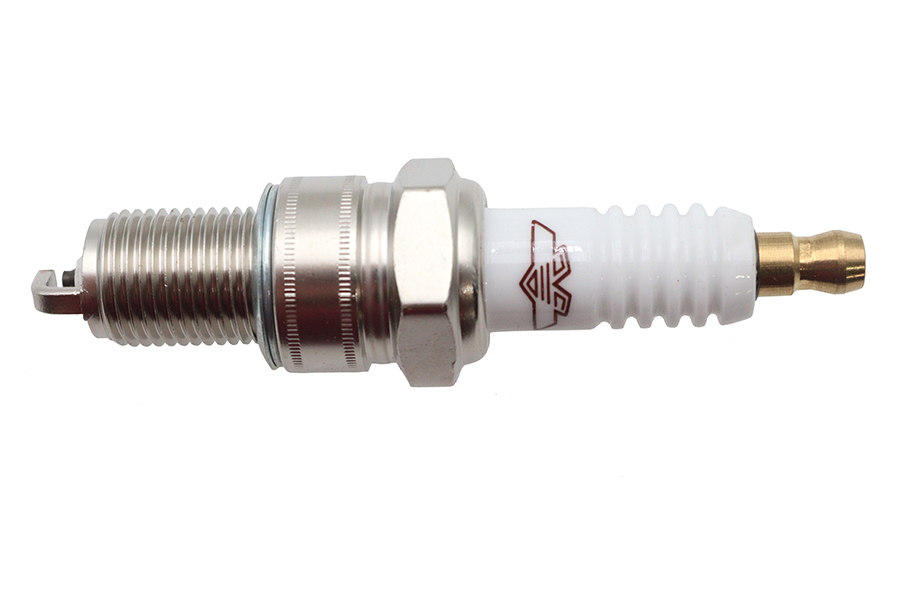
 OE Factory Spark Plug$6.35
 Ultima Standard Spark Plug$7.02
 *UPDATE Battery Top Plug Set$8.58
 Ignition System Cover Allen Screws$8.59
 Parkerized 6 Volt Battery Rod Wing Nuts$9.50
 Accel U-Groove Spark Plug Set$10.64
 8mm Spark Plug Wire Set$10.64Chrome Spark Plug Cover$10.64
 Battery Top Set$10.64Ignition Point Cover Mount Kit Chrome$10.69Ignition System Cover Allen Screw$12.00