Cold Start Guide: 2026 Harley-Davidson Road King FLHR
Cold Start Guide: 2026 Harley-Davidson Road King FLHR
Quick Reference Table
| Spec | Value | Source |
|---|---|---|
| Engine | Milwaukee-Eight 117 (1,923cc) V-twin, OHV 4-valve | Harley-Davidson |
| Fuel System | Electronic Sequential Port Fuel Injection (ESPFI) | H-D Service Manual |
| Battery Type | AGM (Absorbed Glass Mat), 12V | H-D Owner Manual |
| Recommended CCA | Minimum 300 CCA at 0° F | H-D Parts Catalog |
| Idle RPM (Cold) | 1,100-1,200 RPM | H-D Service Manual |
| Idle RPM (Warm) | 1,000-1,050 RPM | H-D Service Manual |
| Choke/Enrichment | None — Auto-enrichment via ECM | H-D Service Manual |
| Fuel Octane | 91 RON (87 AKI) minimum, 93 RON recommended | H-D Owner Manual |
| Cold Start Temp Range | 0° F to 100° F (-18° C to 38° C) | H-D Engineering Specs |
Difficulty & Time Estimate
- Difficulty Level: Beginner (1 out of 5) — fully automatic cold-start procedure
- Estimated Time: 5-7 minutes from key-on to rolling idle (cold engine)
- Seasonal Note: Below 40° F, allow additional 3-5 minutes of warm-up before riding
- The Road King's classic styling with detachable windshield gives it a unique cold-start character — no fairing means the engine and rider are more exposed to crosswinds during warm-up, making sheltered parking important in winter
Pre-Start Checklist
| Checkpoint | Status | Notes |
|---|---|---|
| Battery Voltage | ≥ 12.6V | Use multimeter on battery terminals; below 12.4V may struggle in cold |
| Fuel Level | Adequate | ESPFI requires minimum fuel pressure; very low tank may cause hesitation |
| Oil Level | Between marks | Check dipstick on level ground; engine seated but NOT running |
| Tire Pressure | Per owner's manual / tire placard | Cold tires affect handling on first miles |
| Kill Switch | RUN position | Right handlebar controls — easy to accidentally leave in OFF |
| Transmission | Neutral | Green neutral light must be illuminated |
| Kickstand | Up | Safety interlock prevents start in gear with stand down |
| Key/Fob | Present | Security system (H-D Smart Security) requires fob proximity |
Step-by-Step Cold Start Instructions
Step 1: Pre-Ride Visual Walkaround
Before approaching the controls, walk around the motorcycle. The Road King's classic stripped-down design means components are more visible — use this to your advantage. Check for any fluid leaks, inspect the exhaust headers for condensation or ice in cold weather, and verify nothing is obstructing the air cleaner.
Step 2: Verify Kill Switch Position
Locate the kill switch on the right handlebar switch housing. Slide it to the RUN position (marked with a green arrow icon). It is easy to accidentally bump this switch to OFF when hanging a helmet on the handlebar or when moving the bike.
Step 3: Insert Key or Ensure Fob Proximity
Turn the ignition key to ON. The instrument cluster will illuminate and perform its self-check sequence. Listen for the fuel pump priming — a distinct 2-3 second whirring sound emanating from beneath the fuel tank area.
Step 4: Wait for Fuel Pump Priming
Do not press the starter button until you hear the fuel pump complete its prime cycle. Allow 3-5 seconds. In cold temperatures below 32° F, the ECM may extend the pump prime duration to ensure adequate fuel pressure — do not interrupt this cycle.
Step 5: Confirm Neutral and Pull Clutch
Verify the green neutral indicator is illuminated. Pull in the clutch lever before starting, especially in cold weather. The Milwaukee-Eight's shared oil system means cold oil is thick throughout the engine and transmission — disengaging the clutch reduces rotational drag significantly.
Step 6: Press the Starter Button
Press the starter button on the right handlebar controls. Hold for 2-4 seconds. The Milwaukee-Eight 117 should fire promptly. If the engine does not start after 5 seconds of cranking, release the button and wait 10 seconds before the next attempt to avoid starter overheating.
Step 7: Observe Initial Cold Idle
Once started, the engine will idle at an elevated speed of approximately 1,100-1,200 RPM. This is the ECM's programmed cold idle strategy. The Road King lacks a fairing, so you will feel the characteristic Milwaukee-Eight V-twin exhaust pulse and heat immediately — this is a good visual and tactile confirmation the engine is running.
Step 8: Allow Initial Warm-Up (30-60 Seconds)
Let the engine idle for 30-60 seconds. Listen as the RPM naturally decreases. During this time, check that all dashboard warning lights have extinguished. Without a fairing, cold wind will blow directly across the engine — position the bike so the wind hits the front cylinder fairly.
Step 9: Check for Warning Indicators
Confirm the oil pressure light, ABS light, and security indicator have all turned off. If any warning light stays illuminated after 10 seconds of running, shut off the engine and investigate the cause before attempting to ride.
Step 10: Begin Gentle Warm-Up Riding
After the idle drops near the warm specification (1,000-1,050 RPM), begin riding. Keep engine RPM below 3,000 for the first 1-2 miles. Avoid hard acceleration and use engine braking gently. The Milwaukee-Eight reaches proper operating temperature more quickly under light load than during extended stationary idling.
Step 11: Cold Weather Extended Warm-Up (Below 40° F)
When ambient temperature is below 40° F, extend the stationary warm-up to 3-5 minutes. The Road King's lack of fairing means the engine loses more heat during idle warm-up in wind — park the bike facing into the wind or in a sheltered position when possible. If equipped with an oil temperature gauge, wait for a reading above 140° F before normal riding.
Seasonal & Temperature Guide
| Temperature Range | Procedure | Notes |
|---|---|---|
| Below 20° F (-7° C) | 5-8 min warm-up; shelter from wind | Battery tender essential; park indoors if possible |
| 20-40° F (-7 to 4° C) | 3-5 min warm-up; pull clutch lever | Road King exposed — park facing away from prevailing wind |
| 40-60° F (4 to 16° C) | 1-2 min warm-up; normal procedure | Ideal conditions; minimal cold enrichment required |
| Above 60° F (16° C) | 30-60 sec warm-up; minimal enrichment | Ready to ride quickly; standard start procedure |
Tips, Warnings & Common Mistakes
Helpful Tips
- The Road King's exposed engine actually helps with visual inspection before cold starts — you can see oil leaks, loose connections, and issues that are hidden behind fairings on other Touring models
- No fairing means less aerodynamic wind chill on the engine during warm-up — compensate with slightly longer warm-up times in breezy conditions
- The detachable windshield (Quick-Release windshield) can be added for winter comfort — consider it if you ride in cold weather regularly
- Milwaukee-Eight ESPFI handles all cold enrichment automatically — the system uses intake air temperature, engine temperature, and barometric pressure sensors
- If you remove the battery for winter storage, note that the ECM will forget learned values — it will relearn after a few ride cycles
Warnings
- NEVER use aftermarket fuel additives in a Milwaukee-Eight unless specifically approved by Harley-Davidson — the ECM fuel maps are calibrated for pump fuel only
- Do not block the Road King's air cleaner intake with a winter cover while running — the engine needs unrestricted airflow
- Never start the engine in an enclosed space (garage with door closed) — Milwaukee-Eight 1,923cc produces significant exhaust volume
- Avoid extended revving of a cold engine — the Milwaukee-Eight's pushrod valvetrain needs time for oil to reach the rocker boxes
Common Mistakes to Avoid
| Mistake | Consequence | How to Avoid |
|---|---|---|
| Not pulling clutch on cold start | Extra starter load from thick transmission oil | Always pull clutch lever before pressing starter in cold weather |
| Standing on right side near exhaust | Hot exhaust burns within seconds of start | Stand on the left side during initial start |
| Ignoring oil pressure warning | Severe engine damage from running without pressure | Shut off immediately if oil light persists past 7 seconds |
| Starting with low battery | Starter draws 80-120A — weak battery leads to no-start | Maintain battery with smart charger through winter |
| Revving during warm-up | Disrupts ECM fuel maps, increases engine wear | Let idle stabilize naturally, no throttle input needed |
| Forgetting security fob is dead | Immobilizer prevents start; looks like mechanical failure | Replace CR2032 fob battery annually; keep spare fob |
Battery Maintenance for Cold Starts
| Item | Recommendation |
|---|---|
| Battery Type | AGM 12V, 300+ CCA minimum |
| Cold Weather Impact | Capacity reduced ~35% at 32° F; ~50% at 0° F vs. 72° F |
| Battery Tender | CTEK MXS 5.0 (AGM compatible) — connect during cold season |
| Replacement Interval | 3-5 years; proactively replace before 5th winter |
| Winter Storage | Maintain on smart charger minimum; disconnect battery if no tender |
| Terminal Torque | 20-30 in-lbs — verify at fall maintenance interval |
| Parasitic Draw | ~15mA for security system; ~50mA with accessories |
The Road King's simpler electrical system (no large infotainment screen) places slightly less demand on the battery compared to the Street Glide or Ultra Limited, but the Milwaukee-Eight 117's cranking requirements remain the same — 300+ CCA is non-negotiable for reliable cold starts.
Troubleshooting
| Symptom | Likely Cause | Fix |
|---|---|---|
| Engine cranks but won't fire | Fuel not reaching injectors, security fault | Verify pump prime sound; check security light; try spare fob |
| Labored, slow crank | Battery depleted or terminals corroded | Clean and tighten terminals; charge battery to 12.6V+ |
| Clicking sound, no crank | Starter solenoid not engaging, dead battery | Test battery under load; inspect solenoid wiring |
| Starts then stalls within seconds | IAC valve sticky, security kill, faulty ECT sensor | Clean IAC passages; verify fob detected; scan for DTCs |
| Rough or hunting idle during warm-up | Normal ECM adjustment, or dirty throttle body | Allow 2-3 minutes for stabilization; if persistent, clean TB |
| Oil pressure light remains illuminated | Low oil, incorrect viscosity, or failed pressure sensor | Stop engine, check dipstick, verify correct 20W-50 oil |
Verification Notes for 2026 Model Year
| Item | Known Value | Notes |
|---|---|---|
| Cold idle RPM | 1,100-1,200 RPM | Verify with tachometer; standard for Mil-8 Touring |
| Warm idle RPM | 1,000-1,050 RPM | Standard Mil-8 spec; check owner manual for 2026 updates |
| Battery CCA | 300+ CCA minimum | Verify actual battery spec tag on installed unit |
| Fuel system | ESPFI (auto-enrichment, no choke) | Confirmed for all 2026 Milwaukee-Eight models |
| Security system | H-D Smart Security | Requires active fob; CR2032 battery in fob |
| Frame design | New 2026 Touring frame | Sensor and component locations may differ from 2024 and earlier |
| Starter type | Electric, high-torque | Normal cranking draw 80-120A; test with amp clamp if uncertain |
To verify all specifications, check your 2026 Road King owner's manual included with the motorcycle, or access it through the Harley-Davidson mobile app.
This guide was prepared using Milwaukee-Eight service manual specifications and Harley-Davidson OEM cold-start procedures. Always verify against your specific owner's manual. The 2026 Road King features the new Touring frame design — idle specifications and sensor locations may differ from 2024 and earlier model years.
Parts for this job
Fits FLHR, FLH, FL — from our catalogue of 41,000+ aftermarket parts.
 Battery Label$5.40
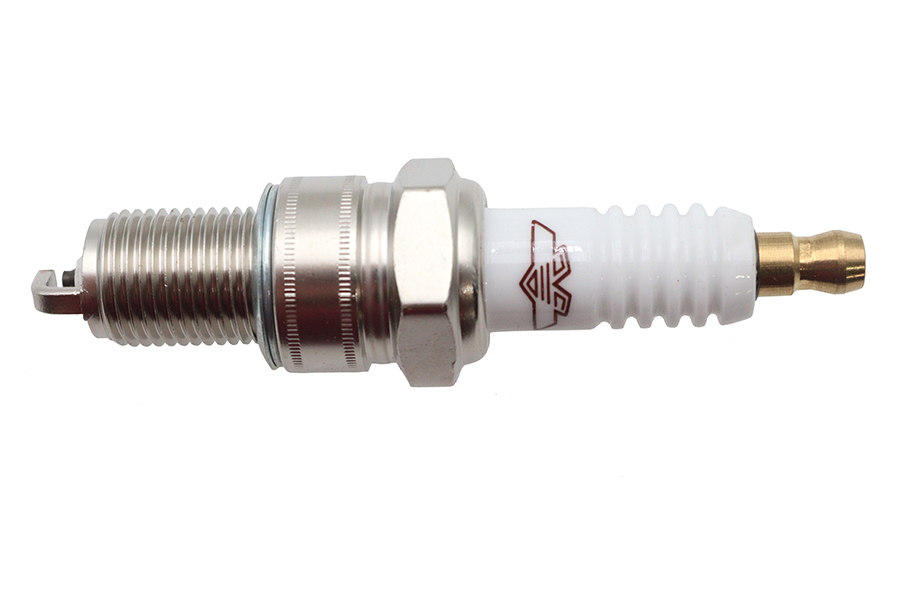
 OE Factory Spark Plug$6.35
 Ultima Standard Spark Plug$7.02
 *UPDATE Battery Top Plug Set$8.58
 Ignition System Cover Allen Screws$8.59
 Parkerized 6 Volt Battery Rod Wing Nuts$9.50
 Accel U-Groove Spark Plug Set$10.64
 8mm Spark Plug Wire Set$10.64Chrome Spark Plug Cover$10.64
 Battery Top Set$10.64Ignition Point Cover Mount Kit Chrome$10.69Ignition System Cover Allen Screw$12.00