Cold Start Guide: 2026 Harley-Davidson Freewheeler FLRT
Cold Start Guide: 2026 Harley-Davidson Freewheeler FLRT
Quick Reference Table
| Spec | Value | Source |
|---|---|---|
| Engine | Milwaukee-Eight 114 (1,868cc) V-twin, OHV 4-valve | Harley-Davidson |
| Fuel System | Electronic Sequential Port Fuel Injection (ESPFI) | H-D Service Manual |
| Transmission | 6-Speed Cruise Drive | H-D Specifications |
| Final Drive | Belt drive | H-D Service Manual |
| Horsepower | ~100 hp @ 5,020 RPM | H-D Engineering Specs |
| Battery Type | AGM (Absorbed Glass Mat), 12V | H-D Owner Manual |
| Recommended CCA | Minimum 300 CCA at 0° F | H-D Parts Catalog |
| Idle RPM (Cold) | 1,100-1,200 RPM | H-D Service Manual |
| Idle RPM (Warm) | 1,000-1,050 RPM | H-D Service Manual |
| Choke/Enrichment | None — Auto-enrichment via ECM | H-D Service Manual |
| Fuel Octane | 91 RON (87 AKI) minimum, 93 RON recommended | H-D Owner Manual |
| Cold Start Temp Range | 0° F to 100° F (-18° C to 38° C) | H-D Engineering Specs |
Difficulty & Time Estimate
- Difficulty Level: Beginner (1 out of 5) — fully automatic cold-start procedure, identical two-wheeler controls
- Estimated Time: 5-7 minutes from key-on to rolling idle (cold engine)
- Seasonal Note: Below 40° F, allow additional 3-5 minutes of warm-up before riding
- The Milwaukee-Eight 114 with ESPFI handles cold starts automatically — no manual choke required
- Trike-Specific Note: The sport trike platform lacks a Tour-Pak or trunk, meaning the battery is more exposed to ambient temperatures; a battery tender becomes essential in winter storage
- The ~1,000 lb trike curb weight demands extra caution during initial rolling — cold rear differential oil should be circulated gently
Pre-Start Checklist
| Checkpoint | Status | Notes |
|---|---|---|
| Battery Voltage | ≥ 12.6V | Use multimeter on battery terminals; below 12.4V will struggle in cold |
| Fuel Level | Adequate | ESPFI requires minimum fuel pressure; very low tank causes hesitation |
| Oil Level | Between marks | Check dipstick on level ground; engine must NOT be running |
| Tire Pressure | Per tire placard (42 PSI front / 41 PSI rear dual wheels) | Cold trike tires lose ~1 PSI per 10° F drop; check before every winter ride |
| Kill Switch | RUN position | Right handlebar controls — easy to accidentally leave in OFF |
| Transmission | Neutral | Green neutral light must be illuminated on instrument cluster |
| Kickstand | Up | Trike safety interlock prevents start in gear with stand down |
| Key/Fob | Present | H-D Smart Security system requires fob proximity within 3 feet |
| Rear Differential Fluid | Checked per service interval | Cold weather thickens diff fluid; ensure recent change if below 20° F |
Step-by-Step Cold Start Instructions
Step 1: Pre-Ride Visual Walkaround
Walk around the entire trike, checking the unique sport trike profile. Look for fluid leaks, loose items, or ice buildup beneath the engine, exhaust, and rear differential housing. Since the Freewheeler lacks a trunk or Tour-Pak fairing, the battery area is more exposed — check for weather ingress or corrosion. In freezing conditions, verify no ice has formed between the rear dual wheels.
Step 2: Verify Kill Switch Position
Locate the engine kill switch on the right handlebar switch housing. Slide it to the RUN position (marked with a green arrow icon). This is the most common no-start cause — the switch is often accidentally bumped to OFF when fitting a trike cover.
Step 3: Insert Key or Ensure Fob Proximity
Insert the ignition key and turn to ON — or if equipped with keyless ignition, ensure the security fob is within range (approximately 3 feet). The 4-inch TFT instrument display will illuminate and run through a system self-check. You will hear the fuel pump cycle for approximately 2-3 seconds as it primes the fuel rail.
Step 4: Wait for Fuel Pump Priming
Do not press the starter button yet. Wait 3-5 seconds for the ESPFI system to build adequate fuel pressure. You will hear a distinct whirring sound as the pump operates. In cold weather below 32° F, the pump may run slightly longer while the ECM reads the engine temperature sensor — this is normal and indicates the system is adapting to ambient conditions.
Step 5: Confirm Neutral and Pull the Clutch Lever
Ensure the transmission is in neutral (green "N" indicator on the TFT display). Pull and hold the clutch lever fully before engaging the starter. This is especially important on the Freewheeler — the heavier rotating mass of the trike drivetrain and thicker cold transmission oil create additional drag on the crankshaft. Pulling the clutch disengages the transmission input shaft and reduces starter load significantly.
Step 6: Press the Starter Button
Press the starter button located on the right handlebar switch housing. Hold for 2-4 seconds. The Milwaukee-Eight 114 should fire promptly. Do not crank for more than 5 seconds continuously. If the engine does not start, release the button, wait 10 seconds to allow the starter motor and battery to recover, then retry. Limit attempts to three before diagnosing the underlying issue.
Note: Do not apply any throttle input. The ECM manages cold enrichment automatically via the electronic throttle body and fuel injectors.
Step 7: Observe Initial Idle Characteristics
Once the engine fires, it will settle into an elevated cold idle of approximately 1,100-1,200 RPM. The sport trike chassis will vibrate noticeably more at this elevated RPM compared to warmed idle — this is normal for the Milwaukee-Eight 114. Do not blip or roll the throttle; the ECM is actively managing the cold-start fuel map based on engine coolant temperature and intake air temperature sensor data.
Step 8: Allow Initial Warm-Up (30-60 Seconds)
Let the engine idle undisturbed for 30-60 seconds. During this period, the RPM will gradually begin to decrease as the oil warms and the ECM reduces enrichment. Verify that all warning lights on the TFT display — oil pressure, ABS, security, and check engine — have extinguished. The Freewheeler's stripped-down sport styling means you have a clear audio profile of the engine; listen for any unusual metallic tapping or knocking sounds.
Step 9: Check for Warning Indicators and System Readiness
After 10 seconds of running, confirm all warning indicators have turned off. Specifically verify: - Oil pressure light: Must extinguish within 5 seconds - ABS light: Should cycle off; the trike's three-wheel ABS system (single front caliper, dual rear calipers) takes slightly longer to self-test - Security indicator: Solid or flashing indicates the Smart Security system is disengaged properly - Check engine light: Should not illuminate; if it does, note any diagnostic trouble codes on the TFT
If any warning light persists, shut off the engine immediately and diagnose before attempting to ride. Riding a trike with an active ABS or oil pressure fault is significantly more dangerous than on a two-wheeled motorcycle.
Step 10: Begin Gentle Warm-Up Riding
Once the RPM stabilizes near warm idle (1,000-1,050 RPM), the Freewheeler is ready for light riding. Keep RPM below 3,000 for the first 1-2 miles. Avoid hard acceleration and use engine braking gently. The Milwaukee-Eight 114 reaches proper operating temperature faster under light load than sitting stationary. Be aware that the trike's weight distribution — with significant mass over the rear axle — means the front tire will take longer to warm and reach optimal grip; corner the first few miles conservatively.
Step 11: Cold Weather Extended Warm-Up (Below 40° F)
If ambient temperature is below 40° F, extend the stationary warm-up to 3-5 minutes. Verify the oil temperature gauge (if equipped via accessory module) reads above 140° F before applying normal throttle. In extreme cold below 20° F, allow 5-8 minutes of total warm-up time. Sport trikes without a Tour-Pak fairing experience greater wind chill on the engine during the initial ride — account for this by allowing extra warm-up time.
Step 12: Rear Differential and Belt Drive Warm-Up
The Freewheeler's belt final drive and rear differential require attention in cold weather. During the first mile, make gentle, gradual speed changes to circulate differential fluid. Avoid aggressive deceleration or sharp throttle inputs, as the belt drive and rear differential fluid need time to reach operating temperature and achieve proper viscosity. The belt itself also stiffens in cold weather — gentle engagement prevents premature belt wear.
Seasonal & Temperature Guide
| Temperature Range | Procedure | Notes |
|---|---|---|
| Below 20° F (-7° C) | 5-8 min warm-up; verify fob battery; pull clutch for start | Use battery tender overnight; expect slower cranking; inspect belt for cold stiffening |
| 20-40° F (-7 to 4° C) | 3-5 min warm-up; always pull clutch lever to start | AGM battery capacity reduced ~30% at 32° F; check tire pressures |
| 40-60° F (4 to 16° C) | 1-2 min warm-up; normal start procedure | Ideal cold-start conditions for M8 114; minimal enrichment required |
| Above 60° F (16° C) | 30-60 sec warm-up; normal start | Near-instant start; minimal enrichment; ready to ride quickly |
Tips, Warnings & Common Mistakes
Helpful Tips
- The Milwaukee-Eight 114 uses sequential port fuel injection — no choke cable, no manual enrichment of any kind
- Battery condition is the single most important factor in reliable cold starts — test annually before winter
- The Freewheeler's sport trike platform lacks a Tour-Pak or trunk fairing, leaving the battery area exposed to weather and cold air — invest in a quality battery blanket or tender for winter storage
- If the trike has been stored for 3+ months, drain old fuel and add fresh premium gasoline before attempting cold start
- The trike's heavier overall weight (~1,000 lbs) puts more demand on the starter motor than a two-wheeled touring bike — keep the battery in top condition
- Keep a smart battery maintainer (CTEK MXS 5.0 or BatteryMINDer 2012) connected during all winter storage periods
- Park on a level surface when possible — the trike's three-point stance makes checking oil level inaccurate on any slope
Warnings
- NEVER hold the starter button for more than 5 seconds continuously — this overheats the starter motor and rapidly drains the battery
- NEVER use starting fluid or ether on a fuel-injected Milwaukee-Eight — this can cause catastrophic engine damage or fire
- Do not rev the engine aggressively during cold warm-up — cold oil has not yet reached the cam bearings, lifters, and piston rings
- Do not ride aggressively until oil temperature reads above 140° F — the transmission and rear differential oil also need time to warm and flow
- Do not ignore trike-specific handling changes in cold weather — the front tire takes significantly longer to warm than on a two-wheeled motorcycle
Common Mistakes to Avoid
| Mistake | Consequence | How to Avoid |
|---|---|---|
| Not waiting for fuel pump prime before cranking | Hard start or lean condition at startup | Always listen for the 2-3 second pump whir before pressing starter |
| Blipping throttle during cold start | Disrupts ECM cold enrichment fuel map; potential flooding | Keep hands completely off the throttle during start and initial idle |
| Starting with kill switch in OFF position | Nothing happens — leads to confused troubleshooting | Always visually and physically verify RUN position as the very first step |
| Riding hard before full warm-up | Accelerated engine, transmission, and differential wear | Gentle throttle and light braking for the first 2-3 miles minimum |
| Ignoring low battery voltage readings | Slow crank, no-start, or total failure in cold weather | Test voltage monthly during winter; keep on a tender when parked |
| Ignoring rear trike tire pressure in cold | Poor handling, uneven tire wear, decreased stability | Check all three tire pressures before every ride; cold tires lose ~1 PSI/10° F |
| Neglecting differential fluid changes | Stiff rear end, binding sensation in cold weather | Change diff fluid per H-D schedule (every 5,000 miles); use specified fluid |
| Using incorrect oil viscosity | Poor cold-start lubrication, increased wear | Use only H-D recommended 20W-50; switch to synthetic in extreme cold if approved |
Battery Maintenance for Cold Starts
| Item | Recommendation |
|---|---|
| Battery Type | AGM 12V, 300+ CCA minimum |
| Cold Weather Impact | AGM retains ~70% capacity at 32° F vs. ~100% at 72° F |
| Battery Tender | CTEK MXS 5.0 or BatteryMINDer 2012 — keep connected during all winter storage |
| Replacement Interval | Every 3-5 years, or at load test when CCA drops below 80% of rated |
| Winter Storage Protocol | Connect to smart charger; check voltage every 2-3 weeks; store indoors if possible |
| Terminal Torque | 20-30 in-lbs for battery terminal bolts — inspect and re-torque annually |
| Exposed Battery Note | The Freewheeler's sport trike design leaves the battery less covered than touring models — use a battery blanket in severe cold |
The Milwaukee-Eight 114 draws significant current during cranking (80-120 amps peak). A battery that performs adequately in summer will often fail without warning in cold weather. Replace batteries proactively before winter rather than waiting for a no-start situation. The trike's ~1,000 lb weight and additional drivetrain components (rear differential, belt drive reduction) add rotational drag during cranking, making battery condition even more critical than on two-wheeled Harley models.
Troubleshooting
| Symptom | Likely Cause | Fix |
|---|---|---|
| Engine cranks but will not fire | Fuel pump not priming, flooded condition, or security immobilizer active | Listen for fuel pump prime; wait 10 seconds and retry; verify fob is within range |
| Slow or labored cranking | Weak battery, corroded/corroded terminals, or cold-thick engine oil | Clean and tighten terminals; charge or test battery; use overnight battery tender |
| Single click, no crank | Dead battery, faulty starter solenoid, or poor ground connection | Charge battery to 12.6V+; check solenoid connections and chassis ground strap |
| Engine starts then immediately stalls | Sticky idle air control valve, security system intervention, or fuel delivery fault | Check security light status; clean IACV per service manual; verify fuel pressure at rail |
| Rough or surging idle during warm-up | Normal ECM cold enrichment cycling; if persistent, check TPS or IACV | Allow 2-3 minutes for idle to smooth out; if roughness persists, diagnose with OBD-II scanner |
| Oil pressure light stays illuminated | Low oil level, wrong oil viscosity, or faulty oil pressure sensor | Check oil level immediately; verify 20W-50 oil installed; replace sensor if fault confirmed |
| ABS light remains on after start | Trike three-wheel ABS self-test fault or wheel speed sensor issue | Do not ride with ABS fault; scan for DTCs; inspect rear wheel speed sensors |
| Belt squeal on cold start | Cold-stiffened drive belt, incorrect belt tension, or pulley misalignment | Inspect belt for cracks; check tension per H-D spec (deflection method); adjust if needed |
Verification Notes for 2026 Model Year
| Item | Known Value | Notes |
|---|---|---|
| Cold idle RPM | 1,100-1,200 RPM | Should settle to ~1,000-1,050 RPM once fully warmed |
| Battery CCA | 300+ CCA recommended | Verify actual spec on installed battery tag; upgrade if below minimum |
| Engine oil grade | SAE 20W-50 per Harley-Davidson specification | Essential for cold-start lubrication; verify level on dipstick before every start |
| Fuel system | ESPFI with auto-enrichment | No choke cable, no petcock, no manual enrichment device exists |
| Starter current draw | 80-120 amps during crank | Normal for Milwaukee-Eight; verify with clamp meter if weak starting suspected |
| Security system | H-D Smart Security (proximity fob) | Immobilizer prevents fuel injection activation without fob detection |
| Oil pressure light | Must extinguish within 5 seconds of engine running | If light persists, shut off engine instantly — do not attempt to ride |
| Front tire pressure (cold) | 42 PSI per H-D spec | Check cold; trike front tire handles all steering — critical for safety |
| Rear tire pressure (cold, dual wheels) | 41 PSI per H-D spec | Equal pressure on both rear wheels is critical for trike stability and handling |
| Belt drive inspection | Check tension and wear every 5,000 miles | Cold weather stiffens belt; cracks and fraying accelerate in freeze-thaw cycles |
To verify all specifications, consult your 2026 Freewheeler owner's manual included with the motorcycle, access it through the Harley-Davidson mobile app, or reference the official H-D service manual for the FLRT platform.
This guide was prepared using Milwaukee-Eight 114 service manual specifications and Harley-Davidson OEM cold-start procedures. Always verify against your specific owner's manual. The 2026 Freewheeler FLRT is a sport trike with stripped-down styling — no Tour-Pak or trunk — which affects battery exposure and cold weather handling. The trike's unique three-wheel rear differential and belt final drive require warm-up procedures beyond standard two-wheeled Harley motorcycles.
Parts for this job
Fits FLRT, FL — from our catalogue of 41,000+ aftermarket parts.
 Battery Label$5.40
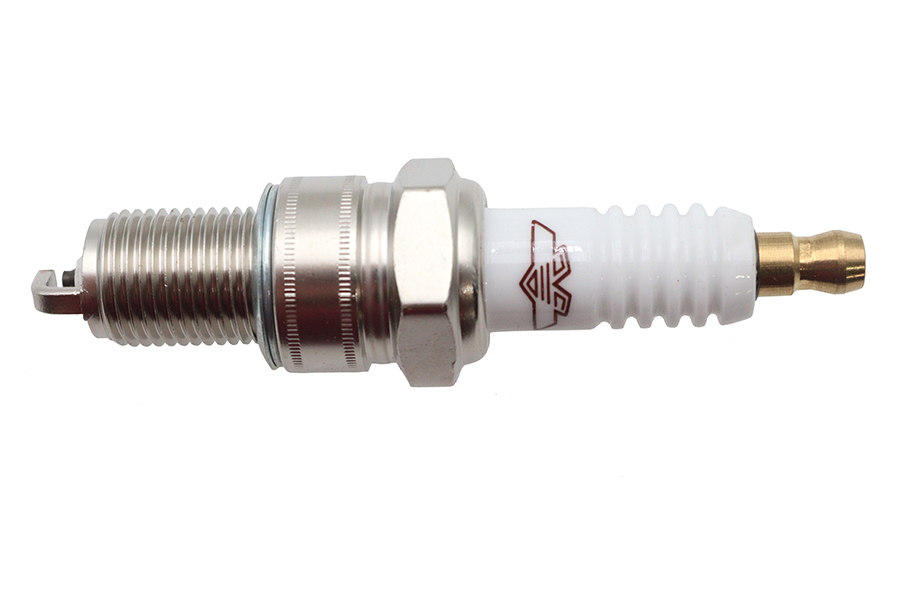 Ultima Standard Spark Plug$7.02
 *UPDATE Battery Top Plug Set$8.58
 Ignition System Cover Allen Screws$8.59
 Parkerized 6 Volt Battery Rod Wing Nuts$9.50
 Accel U-Groove Spark Plug Set$10.64
 8mm Spark Plug Wire Set$10.64Chrome Spark Plug Cover$10.64
 Battery Top Set$10.64Ignition Point Cover Mount Kit Chrome$10.69Ignition System Cover Allen Screw$12.00
 Parkerized Spark Plug Cable Wire Clip$12.10