Cold Start Guide: 2026 Harley-Davidson Fat Boy FLFBS
Cold Start Guide: 2026 Harley-Davidson Fat Boy FLFBS
Quick Reference Table
| Spec | Value | Source |
|---|---|---|
| Engine | Milwaukee-Eight 117 (1,923cc) V-twin, OHV 4-valve, air/oil-cooled | Harley-Davidson |
| Fuel System | Electronic Sequential Port Fuel Injection (ESPFI) | H-D Service Manual |
| Battery Type | AGM, 12V | H-D Owner Manual |
| Recommended CCA | Minimum 300 CCA at 0° F | H-D Parts Catalog |
| Idle RPM (Cold) | 1,000-1,100 RPM | H-D Service Manual |
| Idle RPM (Warm) | 950-1,000 RPM | H-D Service Manual |
| Choke/Enrichment | None — Auto-enrichment via ECM | H-D Service Manual |
| Fuel Octane | 91 RON (87 AKI) minimum, 93 RON recommended | H-D Owner Manual |
| Cold Start Temp Range | 0° F to 100° F (-18° C to 38° C) | H-D Engineering Specs |
| Peak Power Output | ~100hp @ 5,020 RPM / 119 lb-ft @ 3,000 RPM | H-D Dyno Specs |
| Cooling System | Air/oil-cooled | H-D Engineering |
| Transmission | 6-Speed Cruise Drive | H-D Service Manual |
| Display/Infotainment | 4-inch Boom! Box screen with analog speedometer on triple tree | H-D Features |
| Wet Weight | ~699 lbs (wet) | H-D Specifications |
Difficulty & Time Estimate
- Difficulty Level: Beginner (1 out of 5) — fully automatic cold-start procedure
- Estimated Time: 5-7 minutes from key-on to rolling idle (cold engine)
- Seasonal Note: Below 40° F, allow additional 3-5 minutes of warm-up before riding
- The Milwaukee-Eight 117 with ESPFI handles cold starts automatically — no manual choke required
- No fairing means the engine is fully exposed to wind and ambient temperature during warm-up
- Lower idle RPM than touring models (950-1,000 RPM warm) — characteristic of the Milwaukee-Eight 117 on Softail platform
Pre-Start Checklist
| Checkpoint | Status | Notes |
|---|---|---|
| Battery Voltage | ≥ 12.6V | Use multimeter on battery terminals; below 12.4V may struggle in cold |
| Fuel Level | Adequate | ESPFI requires minimum fuel pressure; very low tank may cause hesitation |
| Oil Level | Between marks | Check dipstick on level ground; oil is in the frame on Softail models |
| Tire Pressure | Per owner manual | 240mm wide rear tire requires correct pressure; check front and rear |
| Kill Switch | RUN position | Right handlebar controls — easy to accidentally leave in OFF |
| Transmission | Neutral | Green neutral light must be illuminated |
| Kickstand | Up | Softail frame interlock prevents start in gear with stand down |
| Key/Fob | Present | H-D Smart Security requires fob proximity |
Step-by-Step Cold Start Instructions
Step 1: Pre-Ride Visual Walkaround
Before approaching the controls, walk around the Fat Boy. Check for any fluid leaks, loose items, or obstructions. In cold weather, look for ice on the ground beneath the engine or exhaust. The iconic solid disc wheels can collect ice and snow — verify the wheel wells and tire paths are clear. The wide 240mm rear tire may collect debris or ice around the edges.
Step 2: Verify Kill Switch Position
Locate the kill switch on the right handlebar switch housing. Slide it to the RUN position (marked with a green arrow icon). It is common to accidentally bump this into OFF when covering the bike or adjusting the hand controls.
Step 3: Insert Key or Ensure Fob Proximity
Turn the ignition key to ON — or ensure the fob is within range if equipped with keyless ignition. The 4-inch Boom! Box screen and analog speedometer on the triple tree will illuminate. The analog gauge needle will sweep and return to zero. You will hear the fuel pump prime for approximately 2-3 seconds.
Step 4: Wait for Fuel Pump Priming
Do not press the starter button immediately. Wait 3-5 seconds for the ESPFI system to build fuel pressure. You will hear the fuel pump cycle (a brief whirring sound). In cold weather below 32° F, the pump may run slightly longer — this is normal as the ECM increases fuel pressure for cold enrichment.
Step 5: Confirm Neutral and Disengage Clutch
Ensure the transmission is in neutral (green indicator light). For an extra margin of safety, especially in cold weather, pull in the clutch lever. This reduces crankshaft drag from thick cold oil in the transmission, which is important given the Fat Boy is ~100 lbs lighter than the touring variants but uses the same Milwaukee-Eight 117 engine.
Step 6: Press the Starter Button
Press the starter button on the right handlebar. Hold for 2-4 seconds. The Milwaukee-Eight 117 should fire quickly. Do not hold the starter for more than 5 seconds at a time — if the engine does not start, release the button and wait 10 seconds before trying again.
Note: No throttle input is needed. The ECM controls the air-fuel ratio for cold enrichment automatically via the ESPFI system.
Step 7: Observe Initial Idle
Once started, the engine will idle at an elevated RPM (approximately 1,000-1,100 RPM). This is slightly lower than touring models — the Fat Boy ECM calibration is tuned for the cruiser application. Do not blip the throttle. The auto-enrichment system manages fuel delivery based on engine temperature sensor readings.
Step 8: Allow Initial Warm-Up (30-60 Seconds)
Let the engine settle for 30-60 seconds. You will hear and feel the RPM gradually decrease as the oil warms and the ECM reduces enrichment. During this time, verify all dashboard warning lights have extinguished. Unlike touring models with full digital displays, the Fat Boy analog speedometer and Boom! Box screen show fewer gauges — rely on the warning lights for status.
Step 9: Check for Warning Indicators
Confirm that the oil pressure light, ABS light, and security light have all turned off. If any warning light remains illuminated after 10 seconds of running, shut off the engine and diagnose before riding.
Step 10: Begin Gentle Warm-Up Riding
After the RPM stabilizes near warm idle (950-1,000 RPM), you may begin riding. Keep RPM below 3,000 for the first 1-2 miles, avoid hard acceleration, and use engine braking gently. The Milwaukee-Eight reaches proper operating temperature faster under light load than sitting at a stop. The Fat Boy has no fairing, so riding at moderate speed will warm the engine more effectively than stationary idling.
Step 11: Cold Weather Warm-Up (Below 40° F)
If ambient temperature is below 40° F, extend the stationary warm-up to 3-5 minutes before riding. Verify the oil temperature gauge (if equipped on your model year) reads above 140° F before applying normal throttle. Without a fairing for wind protection, the engine will lose heat quickly if sitting in cold wind — plan to begin gentle riding once minimum oil temperature is reached. In extreme cold (below 20° F), allow 5-8 minutes of warm-up total.
Seasonal & Temperature Guide
| Temperature Range | Procedure | Notes |
|---|---|---|
| Below 20° F (-7° C) | 5-8 min warm-up; verify fob battery | Solid disc wheels retain cold; no wind protection during warm-up |
| 20-40° F (-7 to 4° C) | 3-5 min warm-up; pull clutch for start | AGM battery performance reduced ~30% at 32° F |
| 40-60° F (4 to 16° C) | 1-2 min warm-up; normal start procedure | Ideal cold-start conditions for Milwaukee-Eight |
| Above 60° F (16° C) | 30-60 sec warm-up; normal start | Minimal enrichment needed; ready to ride quickly |
Tips, Warnings & Common Mistakes
Helpful Tips
- The Milwaukee-Eight 117 uses sequential port fuel injection — no choke, no manual enrichment
- Fat Boy solid disc wheels and 240mm rear tire are iconic but add rotating mass — account for this during cold starts
- No fairing means direct wind exposure during warm-up — plan to begin gentle riding promptly after minimum warm-up
- Battery condition is the number one factor in reliable cold starts — test annually before winter
- The Fat Boy lighter weight (699 lbs vs 838+ lbs for touring) makes it easier to handle on slippery cold surfaces
- Softail hidden rear suspension — oil is located in the frame, not a separate tank
- Keep a battery tender (CTEK or BatteryMINDer) connected during winter months for instant starts
Warnings
- NEVER hold the starter button for more than 5 seconds continuously — this overheats the starter motor and drains the battery
- NEVER use starting fluid or ether on a fuel-injected Harley — this can cause engine damage or fire
- Do not rev the engine aggressively during warm-up — cold oil has not yet reached critical components
- Never ride with oil temperature below 140° F — the transmission oil is also cold and needs time to flow
- Without wind protection, extended stationary warm-up in cold weather is less effective — ride gently to warm the engine
Common Mistakes to Avoid
| Mistake | Consequence | How to Avoid |
|---|---|---|
| Not waiting for fuel pump prime | Hard start or flooding | Always listen for the 2-3 second pump whir |
| Blipping throttle during cold start | Disrupts ECM enrichment map | Hands off the throttle entirely |
| Starting with kill switch in OFF | Nothing happens — confused diagnosis | Always verify RUN position first |
| Riding hard before warm-up | Increased engine wear, poor shift quality | Gentle riding for first 2 miles minimum |
| Ignoring low battery voltage | Slow crank, no-start in cold weather | Test voltage monthly during winter |
| Using wrong fuel octane | Knocking, poor running, long-term damage | 87 AKI minimum, 93 RON recommended in cold |
Battery Maintenance for Cold Starts
| Item | Recommendation |
|---|---|
| Battery Type | AGM 12V, 300+ CCA |
| Cold Weather Impact | AGM retains ~70% capacity at 32° F vs. ~100% at 72° F |
| Battery Tender | CTEK MXS 5.0 or BatteryMINDer 2012 — connect during storage |
| Replacement Interval | Every 3-5 years, or when CCA drops below 80% of rated |
| Winter Storage | Connect to smart charger; check voltage every 2-3 weeks |
| Terminal Torque | 20-30 in-lbs for battery terminal bolts — check annually |
The Milwaukee-Eight 117 draws significant current during cranking (80-120 amps). A weak battery that seems fine in summer will fail in cold weather. The Fat Boy has fewer electronics than touring models (no full Boom! Box GTS or navigation), which reduces parasitic drain during winter storage compared to fully-equipped touring bikes. Replace batteries proactively before winter rather than waiting for a no-start.
Troubleshooting
| Symptom | Likely Cause | Fix |
|---|---|---|
| Engine cranks but will not start | Fuel pump not priming, flooded, or security fault | Listen for pump prime; wait 10 seconds and retry; verify fob |
| Slow cranking sound | Weak battery, corroded terminals, cold-thick oil | Clean terminals, charge/test battery, use tender |
| Clicking but no crank | Dead battery or faulty starter solenoid | Charge battery to 12.6V+, check solenoid connections |
| Engine starts then dies immediately | Idle air control valve sticky, security system, fuel issue | Check security light; clean IAC; verify fuel delivery |
| Rough idle during warm-up | Normal cold enrichment — ECM adjusting | Allow 2-3 minutes; if persistent, check TPS and IACV |
| Oil pressure light stays on | Low oil level, wrong oil viscosity, faulty sensor | Check oil level immediately; verify 20W-50 oil |
Verification Notes for 2026 Model Year
| Item | Known Value | Notes |
|---|---|---|
| Cold idle RPM | 1,000-1,100 RPM | Verify on warm-up; should settle to 950-1,000 RPM warm |
| Battery CCA | 300+ CCA recommended | Check actual battery spec tag on installed unit |
| Engine oil grade | SAE 20W-50 per H-D spec | Critical for cold-start lubrication; verify dipstick before start |
| Fuel system | ESPFI (auto-enrichment) | No choke cable or manual enrichment exists |
| Starter current draw | 80-120 amps during crank | Normal for Milwaukee-Eight; verify with amp clamp if suspect |
| Security system | H-D Smart Security | Fob must be detected; immobilizer prevents start without fob |
| Oil pressure light | Should extinguish within 5 seconds of running | If not, stop engine immediately |
| Softail frame | Hidden rear suspension | Oil is in the frame, not a separate tank — check level accordingly |
To verify all specifications, check your 2026 Fat Boy owner manual included with the motorcycle, or access it through the Harley-Davidson mobile app.
This guide was prepared using Milwaukee-Eight service manual specifications and Harley-Davidson OEM cold-start procedures. Always verify against your specific owner manual. The 2026 Fat Boy uses the Softail platform with Milwaukee-Eight 117 engine — oil level check differs from touring models as oil is located in the frame. Idle specifications may vary from earlier model years.
Parts for this job
Fits FLFBS, FLFB, FL — from our catalogue of 41,000+ aftermarket parts.
 Battery Label$5.40
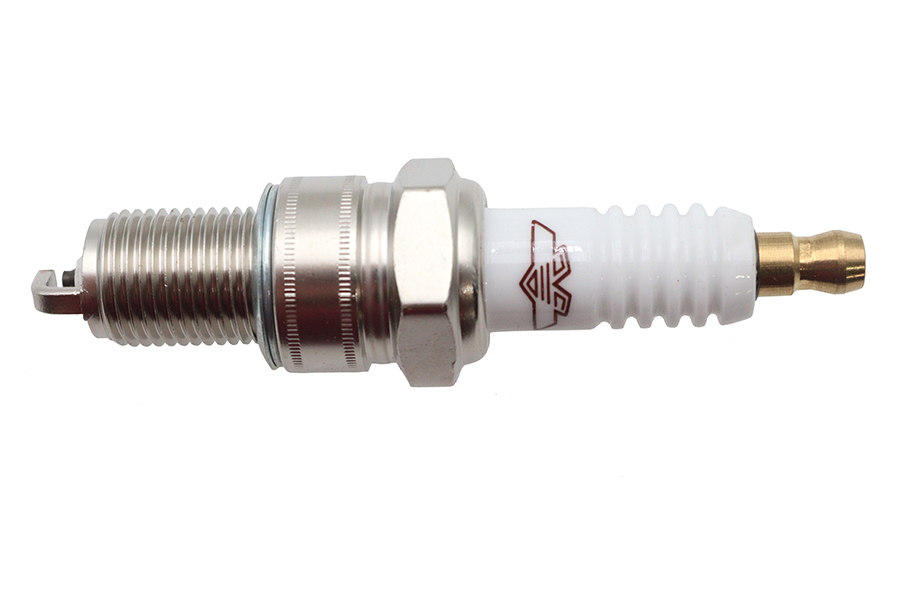 Ultima Standard Spark Plug$7.02
 *UPDATE Battery Top Plug Set$8.58
 Ignition System Cover Allen Screws$8.59
 Parkerized 6 Volt Battery Rod Wing Nuts$9.50
 Accel U-Groove Spark Plug Set$10.64
 8mm Spark Plug Wire Set$10.64Chrome Spark Plug Cover$10.64
 Battery Top Set$10.64Ignition Point Cover Mount Kit Chrome$10.69Ignition System Cover Allen Screw$12.00
 Parkerized Spark Plug Cable Wire Clip$12.10