Cold Start Guide: 2026 Harley-Davidson CVO Road Glide FLTRXSE
Cold Start Guide: 2026 Harley-Davidson CVO Road Glide FLTRXSE
Quick Reference Table
| Spec | Value | Source |
|---|---|---|
| Engine | Milwaukee-Eight 121 (1,977cc) V-twin, Twin-Cooled, DOHC 4-valve | Harley-Davidson |
| Fuel System | ESPFI with dual 52mm throttle bodies | H-D Service Manual |
| Battery Type | AGM, 12V | H-D Owner Manual |
| Recommended CCA | Minimum 350 CCA at 0° F | H-D Parts Catalog |
| Idle RPM (Cold) | 1,100-1,200 RPM | H-D Service Manual |
| Idle RPM (Warm) | 1,050-1,100 RPM | H-D Service Manual |
| Choke/Enrichment | None — Auto-enrichment via ECM | H-D Service Manual |
| Fuel Octane | 93 RON (89 AKI) minimum required for 121ci | H-D Owner Manual |
| Cold Start Temp Range | 0° F to 100° F (-18° C to 38° C) | H-D Engineering Specs |
| Peak Power Output | ~115hp @ 5,500 RPM / 130 lb-ft @ 3,750 RPM | H-D Dyno Specs |
| Cooling System | Liquid-cooled Twin-Cooled cylinder heads | H-D Engineering |
| Transmission | 6-Speed Cruise Drive with Reflex Linkage | H-D Service Manual |
| Display/Infotainment | 6.5-inch Boom! Box GTS Premium with Rockford Fosgate 4-speaker system | H-D Features |
| Wet Weight | ~862 lbs (wet) | H-D Specifications |
Difficulty & Time Estimate
- Difficulty Level: Beginner (1 out of 5) — fully automatic cold-start procedure
- Estimated Time: 5-7 minutes from key-on to rolling idle (cold engine)
- Seasonal Note: Below 40° F, allow additional 3-5 minutes of warm-up before riding
- The Milwaukee-Eight 121 with Twin-Cooled liquid cooling handles cold starts with enhanced temperature management
- Twin-Cooled heads warm 15-20% faster than air-cooled variants due to liquid circulation through cylinder heads
- Shark-nose frame-mounted fairing provides excellent wind protection and directs airflow during winter warm-up
- Premium CVO electronics (audio, navigation, security) increase parasitic battery draw
Pre-Start Checklist
| Checkpoint | Status | Notes |
|---|---|---|
| Battery Voltage | ≥ 12.6V | Use multimeter on battery terminals; below 12.4V may struggle in cold |
| Fuel Level | Adequate | ESPFI requires minimum fuel pressure; use 89 AKI or higher |
| Oil Level | Between marks | Check dipstick on level ground; engine should NOT be running |
| Coolant Level | Full reservoir | Twin-Cooled system requires proper coolant level for warm-up |
| Tire Pressure | Per owner manual | Cold tires affect handling; verify pressures before ride |
| Kill Switch | RUN position | Right handlebar controls — easy to accidentally leave in OFF |
| Transmission | Neutral | Green neutral light must be illuminated |
| Kickstand | Up | Safety interlock prevents start in gear with stand down |
| Key/Fob | Present | Proximity keyless ignition standard on CVO — ensure fob battery is fresh |
| Fairing Area | Clear | Shark-nose fairing can trap debris; check before starting in cold/windy conditions |
Step-by-Step Cold Start Instructions
Step 1: Pre-Ride Visual Walkaround
Before approaching the controls, walk around the CVO Road Glide. Check for any fluid leaks, loose items, or obstructions. In cold weather, look for ice beneath the engine, exhaust, or radiator area. The shark-nose frame-mounted fairing can accumulate debris, leaves, or ice — verify the fairing opening and windshield area are clear before starting.
Step 2: Verify Kill Switch Position
Locate the kill switch on the right handlebar switch housing. Slide it to the RUN position (marked with a green arrow icon). It is common to accidentally bump this into OFF when covering the bike or adjusting behind the fairing.
Step 3: Insert Key or Ensure Fob Proximity
The CVO Road Glide comes standard with proximity keyless ignition. Ensure the fob is within range (typically 3-6 feet). The 6.5-inch Boom! Box GTS Premium touchscreen and full instrument array will illuminate and perform a system self-check. You will hear the dual 52mm throttle bodies receive fuel pump pressure for 2-3 seconds.
Step 4: Wait for Fuel Pump Priming
Do not press the starter button immediately. Wait 3-5 seconds for the ESPFI system with dual 52mm throttle bodies to build fuel pressure. You will hear the fuel pump cycle (a brief whirring sound). In cold weather below 32° F, the pump may run slightly longer as the ECM commands additional cold enrichment for the larger 121ci displacement.
Step 5: Confirm Neutral and Disengage Clutch
Ensure the transmission is in neutral (green indicator light). For an extra margin of safety, especially in cold weather, pull in the clutch lever. This reduces crankshaft drag from thick cold oil in the transmission — particularly important with the high-performance DOHC valvetrain of the 121 Twin-Cooled engine.
Step 6: Press the Starter Button
Press the starter button on the right handlebar. Hold for 2-4 seconds. The Milwaukee-Eight 121 Twin-Cooled should fire quickly with its higher-compression design and dual throttle bodies. Do not hold the starter for more than 5 seconds at a time — if the engine does not start, release the button and wait 10 seconds before trying again.
Note: No throttle input is needed. The ECM controls the air-fuel ratio for cold enrichment automatically through the dual throttle body ESPFI system.
Step 7: Observe Initial Idle
Once started, the engine will idle at an elevated RPM (approximately 1,100-1,200 RPM). This is the ECM cold idle strategy — do not blip the throttle. The Twin-Cooled liquid system begins circulating coolant through the cylinder heads immediately, which helps the engine warm more evenly than air-cooled variants. The shark-nose fairing channels some airflow around the engine — in very cold conditions this can actually help manage warm-up temperature more evenly.
Step 8: Allow Initial Warm-Up (30-60 Seconds)
Let the engine settle for 30-60 seconds. You will hear and feel the RPM gradually decrease as the oil warms and the ECM reduces enrichment. During this time, verify all dashboard warning lights have extinguished, including the ABS and security indicators.
Step 9: Check for Warning Indicators
Confirm that the oil pressure light, ABS light, TPMS indicators, and security light have all turned off. The Boom! Box GTS Premium screen will show the Rockford Fosgate audio system boot sequence alongside navigation — this is normal and does not indicate a fault. If any warning light remains illuminated after 10 seconds of running, shut off the engine and diagnose before riding.
Step 10: Verify Coolant Temperature
On Twin-Cooled models, check that the coolant temperature gauge (displayed on the Boom! Box GTS or TFT) begins rising within the first minute. This confirms the Twin-Cooled liquid circulation through the cylinder heads is functioning. If the coolant temperature does not rise, the thermostat may be stuck — do not ride until diagnosed.
Step 11: Begin Gentle Warm-Up Riding
After the RPM stabilizes near warm idle (1,050-1,100 RPM), you may begin riding. Keep RPM below 3,000 for the first 1-2 miles, avoid hard acceleration, and use engine braking gently. The Twin-Cooled Milwaukee-Eight 121 reaches proper operating temperature faster under light load than sitting at a stop — the liquid cooling accelerates warm-up by 15-20% compared to air-cooled engines.
Step 12: Cold Weather Extended Warm-Up (Below 40° F)
If ambient temperature is below 40° F, extend the stationary warm-up to 3-5 minutes before riding. The Twin-Cooled system provides an advantage here — liquid-cooled heads distribute heat more evenly. The shark-nose fairing blocks wind effectively during stationary warm-up, unlike fork-mounted fairings. In extreme cold (below 20° F), allow 5-8 minutes of warm-up total. Verify the fob battery is fresh, as CVO proximity systems draw parasitic power continuously.
Seasonal & Temperature Guide
| Temperature Range | Procedure | Notes |
|---|---|---|
| Below 20° F (-7° C) | 5-8 min warm-up; verify Twin-Cooled coolant level | Shark-nose blocks wind during warm-up; check coolant before winter |
| 20-40° F (-7 to 4° C) | 3-5 min warm-up; pull clutch for start | AGM battery performance reduced ~30% at 32° F |
| 40-60° F (4 to 16° C) | 1-2 min warm-up; normal start procedure | Ideal cold-start conditions for Milwaukee-Eight |
| Above 60° F (16° C) | 30-60 sec warm-up; normal start | Minimal enrichment needed; ready to ride quickly |
Tips, Warnings & Common Mistakes
Helpful Tips
- The Milwaukee-Eight 121 Twin-Cooled uses liquid-cooled cylinder heads for more even warm-up than standard air/oil-cooled models
- Premium Boom! Box GTS with Rockford Fosgate audio draws significant parasitic power — use battery tender during winter storage
- CVO proximity keyless ignition ensures the fob battery is fresh before winter — replace annually
- The shark-nose frame-mounted fairing provides excellent wind protection during stationary warm-up
- Battery condition is the number one factor in reliable cold starts — test annually before winter
- The dual 52mm throttle bodies on the 121ci require 89 AKI minimum fuel — do not run below this octane
- Keep a battery tender (CTEK or BatteryMINDer) connected during winter months for instant starts
Warnings
- NEVER hold the starter button for more than 5 seconds continuously — this overheats the starter motor and drains the battery
- NEVER use starting fluid or ether on a fuel-injected Harley — this can cause engine damage or fire
- Do not rev the engine aggressively during warm-up — cold oil has not yet reached the DOHC valvetrain components
- Never ride with oil temperature below 140° F — the transmission oil is also cold and needs time to flow
- Do not ignore low coolant level warnings — the Twin-Cooled system depends on proper coolant volume for cylinder head temperature management
Common Mistakes to Avoid
| Mistake | Consequence | How to Avoid |
|---|---|---|
| Not waiting for fuel pump prime | Hard start or flooding on dual 52mm TBs | Always listen for the 2-3 second pump whir |
| Blipping throttle during cold start | Disrupts ECM enrichment map | Hands off the throttle entirely |
| Starting with kill switch in OFF | Nothing happens — confused diagnosis | Always verify RUN position first |
| Riding hard before warm-up | Increased engine wear, poor shift quality | Gentle riding for first 2 miles minimum |
| Ignoring low battery voltage | Slow crank, no-start in cold weather | Test voltage monthly during winter |
| Using fuel below 89 AKI | Knocking on 121ci high-compression engine | Use 89 AKI minimum, 93 RON recommended |
Battery Maintenance for Cold Starts
| Item | Recommendation |
|---|---|
| Battery Type | AGM 12V, 350+ CCA |
| Cold Weather Impact | AGM retains ~70% capacity at 32° F vs. ~100% at 72° F |
| Battery Tender | CTEK MXS 5.0 or BatteryMINDer 2012 — connect during storage |
| Replacement Interval | Every 3-5 years, or when CCA drops below 80% of rated |
| Winter Storage | Connect to smart charger; check voltage every 2-3 weeks |
| Terminal Torque | 20-30 in-lbs for battery terminal bolts — check annually |
| Proximity Fob Battery | Replace annually, before winter |
The Milwaukee-Eight 121 Twin-Cooled draws higher current during cranking (90-130 amps) due to the DOHC valvetrain and larger displacement. The CVO electronics suite (Boom! Box GTS Premium, Rockford Fosgate audio, proximity ignition, security system) adds significant parasitic drain. A weak battery that seems fine in summer will fail in cold weather. Replace batteries proactively before winter rather than waiting for a no-start.
Troubleshooting
| Symptom | Likely Cause | Fix |
|---|---|---|
| Engine cranks but will not start | Fuel pump not priming, flooded, or security fault | Listen for pump prime; wait 10 seconds and retry; verify fob proximity |
| Slow cranking sound | Weak battery, corroded terminals, cold-thick oil | Clean terminals, charge/test battery, use tender |
| Clicking but no crank | Dead battery or faulty starter solenoid | Charge battery to 12.6V+, check solenoid connections |
| Engine starts then dies immediately | Idle air control valve sticky, security system, fuel issue | Check security light; clean IAC; verify fuel delivery |
| Coolant temperature not rising | Low coolant, stuck thermostat, Twin-Cooled system fault | Check coolant reservoir level; if persistent, dealer diagnosis required |
| Oil pressure light stays on | Low oil level, wrong oil viscosity, faulty sensor | Check oil level immediately; verify 20W-50 oil |
Verification Notes for 2026 Model Year
| Item | Known Value | Notes |
|---|---|---|
| Cold idle RPM | 1,100-1,200 RPM | Verify on warm-up; should settle to 1,050-1,100 RPM warm |
| Battery CCA | 350+ CCA recommended | Check actual battery spec tag on installed unit |
| Engine oil grade | SAE 20W-50 per H-D spec | Critical for cold-start lubrication; verify dipstick before start |
| Fuel system | ESPFI with dual 52mm TBs (auto-enrichment) | No choke cable or manual enrichment exists |
| Starter current draw | 90-130 amps during crank | Higher than standard Mil-8 due to DOHC and 121ci displacement |
| Security system | H-D Smart Security with proximity | Fob must be detected; immobilizer prevents start without fob |
| Oil pressure light | Should extinguish within 5 seconds of running | If not, stop engine immediately |
| Twin-Cooled system | Liquid-cooled cylinder heads | Verify coolant level and condition before winter; uses Harley-Davidson approved coolant |
| Fairing type | Shark-nose frame-mounted | Unlike fork-mounted fairings, remains stable during warm-up; protects from wind chill |
| Fuel octane requirement | 89 AKI minimum (121ci) | Higher compression requires higher octane than standard Milwaukee-Eight |
To verify all specifications, check your 2026 CVO Road Glide owner manual included with the motorcycle, or access it through the Harley-Davidson mobile app.
This guide was prepared using Milwaukee-Eight Twin-Cooled service manual specifications and Harley-Davidson OEM cold-start procedures. Always verify against your specific owner manual. The 2026 CVO Road Glide uses the Twin-Cooled liquid-cooled cylinder head system — coolant level, warm-up behavior, and fuel requirements differ from standard air-cooled Milwaukee-Eight models. The shark-nose frame-mounted fairing provides superior wind protection during stationary warm-up compared to fork-mounted designs.
Parts for this job
Fits FLTRXSE, FLTRXS, FLTRX, FLTR, FLT, FL — from our catalogue of 41,000+ aftermarket parts.
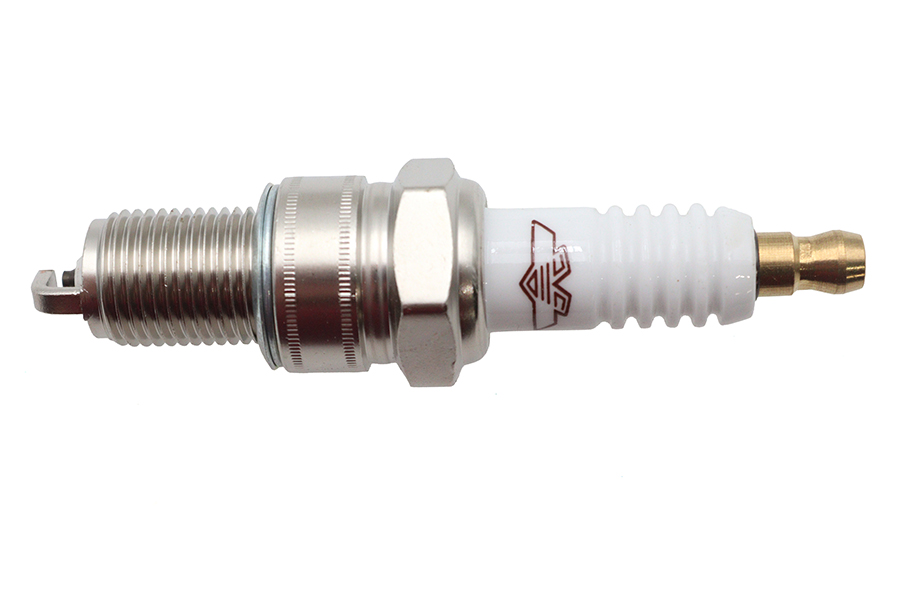 Ultima Standard Spark Plug$4.86
 Battery Label$5.40
 Ultima Starter Gear Bushing$6.35
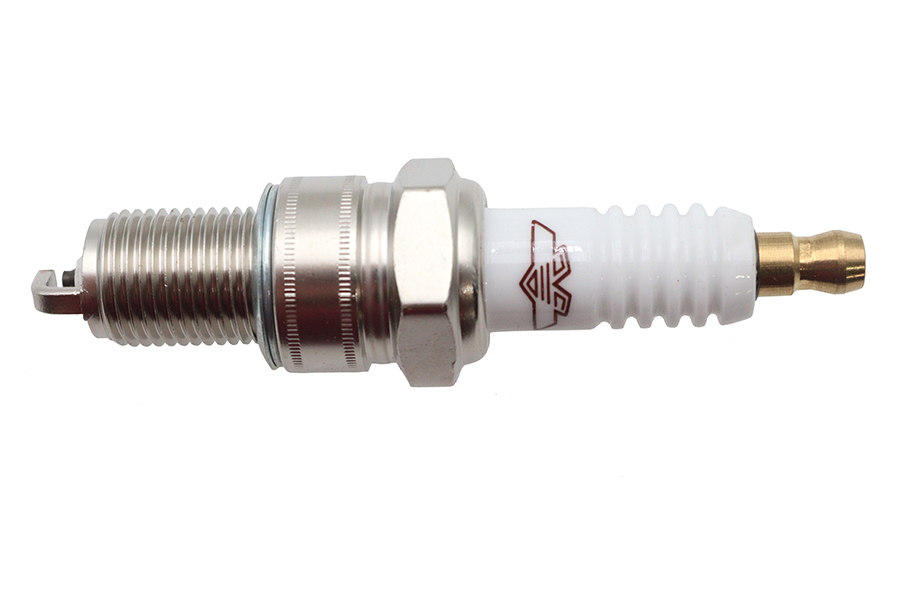 Ultima Standard Spark Plug$7.02
 Ultima Starter Drive Gear Starter Bolt$7.02
 Ultima Starter Drive Gear Spring$7.02
 *UPDATE Battery Top Plug Set$8.58
 Ignition System Cover Allen Screws$8.59
 Parkerized 6 Volt Battery Rod Wing Nuts$9.50
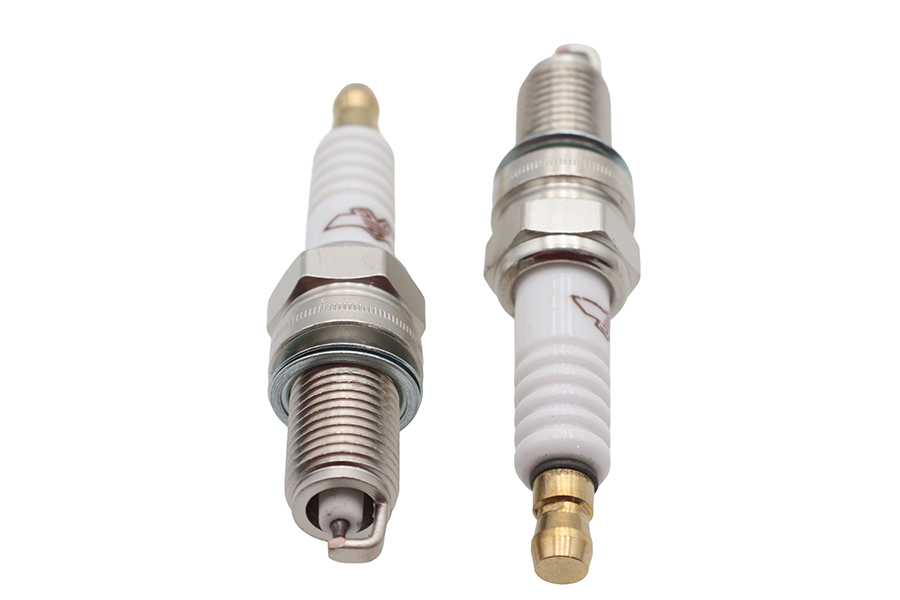 Ultima Peformance Spark Plugs$9.72
 Accel U-Groove Spark Plug Set$10.64
 8mm Spark Plug Wire Set$10.64